Creativity
Choosing the right coloring book for your child
19 July 2026 · 5 min read
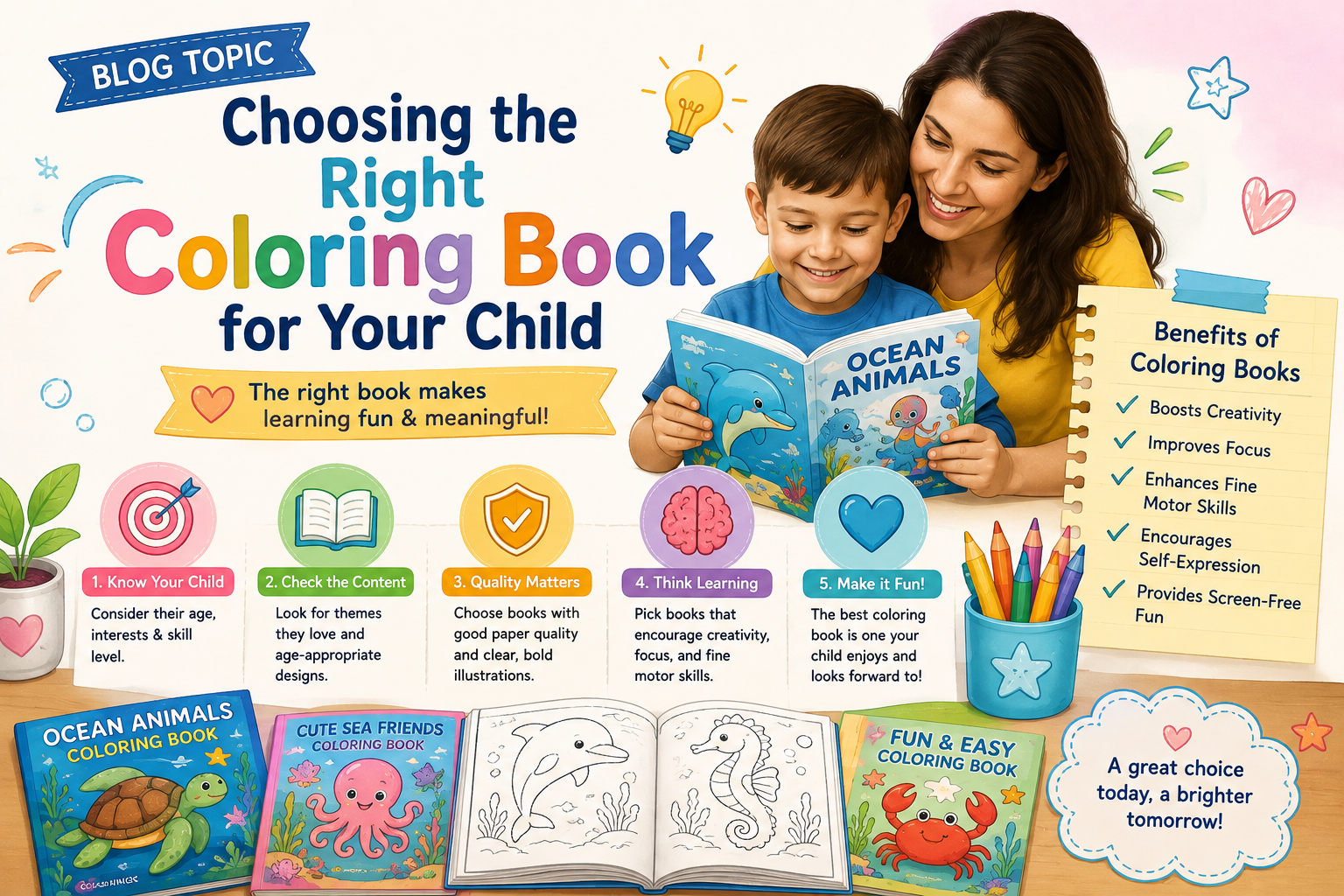
Most coloring books look identical on a shelf. The differences that decide whether a child returns to a book — or abandons it after two pages — are all physical, and you can check them in under a minute.
Test one: hold the page to the light
Thin paper is the most common failure. If you can clearly read the print on the following page through the sheet, a felt-tip pen will bleed straight through and ruin two illustrations at once.
Single-sided printing solves this entirely, which is why every SKAV coloring title prints one illustration per leaf and leaves the reverse blank.
Test two: look at the line weight
Under-eights color with crayons and chunky pencils, and those tools cannot respect a hairline. Bold, closed outlines give a child a boundary they can actually stay inside, which is where the satisfaction comes from.
Fine, intricate line work belongs to older children and adults. Sold to a five-year-old, it produces frustration and a scribbled page.
Test three: count the elements on one page
For ages four to eight, one clear subject with a simple background is right. Twenty tiny shapes on a spread reads as work rather than play, and the child stops before finishing — which undoes the point of the exercise.
Our Ocean Animals titles follow this rule: one friendly creature per page, a light setting behind it, and a short fun fact so the page rewards curiosity as well as color.
Matching the book to the child
Ages 3–5 want very large shapes and tracing support. Ages 4–8 want recognisable subjects, variety and a reason to care about what they are coloring. Ages 8+ can handle detail, pattern and shading.
Theme matters too. A child who loves the sea will color thirty pages of sea creatures; the same child will abandon a generic mixed-subject book by page five.
In short
Paper you cannot see through, outlines a crayon can follow, and a subject the child already loves — that is the whole checklist.